Introduction
Every enterprise runs on dozens — sometimes hundreds — of systems. CRMs, ERPs, HR platforms, supply chain tools, analytics engines. They each do their job well. But they don't naturally speak to each other. Enterprise Integration is the discipline that makes them talk, cooperate, and act as one organism rather than a collection of isolated parts.
Each system is good at something, but real business value comes when they work together.
This is where Enterprise Integration plays a critical role.
What Is Enterprise Integration?
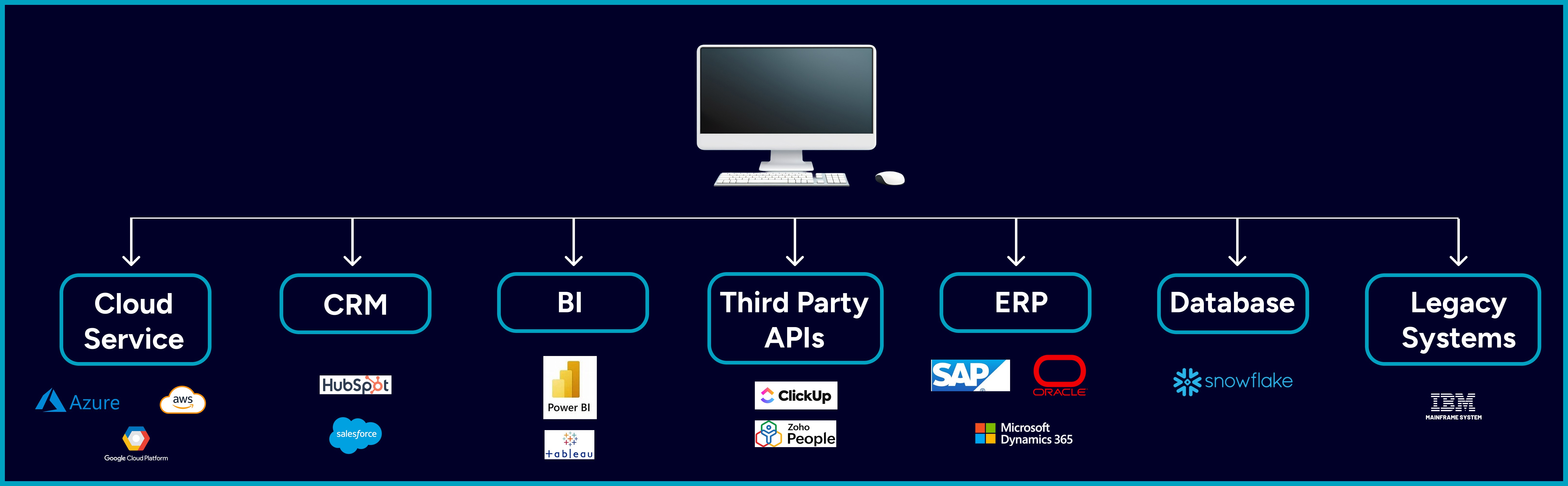
Imagine your company's IT landscape as a city. SAP is the city hall. Salesforce is the commercial district. Your legacy ERP is an old industrial quarter from the 1990s. Your mobile app is a shiny new neighbourhood. Everyone lives in their own zone, speaks their own dialect, follows their own bylaws — and there's almost no reliable public transit between them.
Enterprise Integration is the infrastructure that builds the roads, the bridges, the bus routes, and the translation services between all of those districts. Formally defined, it is the set of architectures, patterns, technologies, and practices that enable disparate systems, applications, and data sources across an enterprise to communicate, share data, and function cohesively as a unified whole.
It is not just about data transfer. Integration enables orchestrated business processes that span multiple systems. When a customer places an order in your e-commerce platform, integration ensures that the inventory system is updated, the warehouse management system queues the pick, the ERP records the financial transaction, and the CRM logs the customer touchpoint — all automatically, reliably, and consistently.
Technical Definition
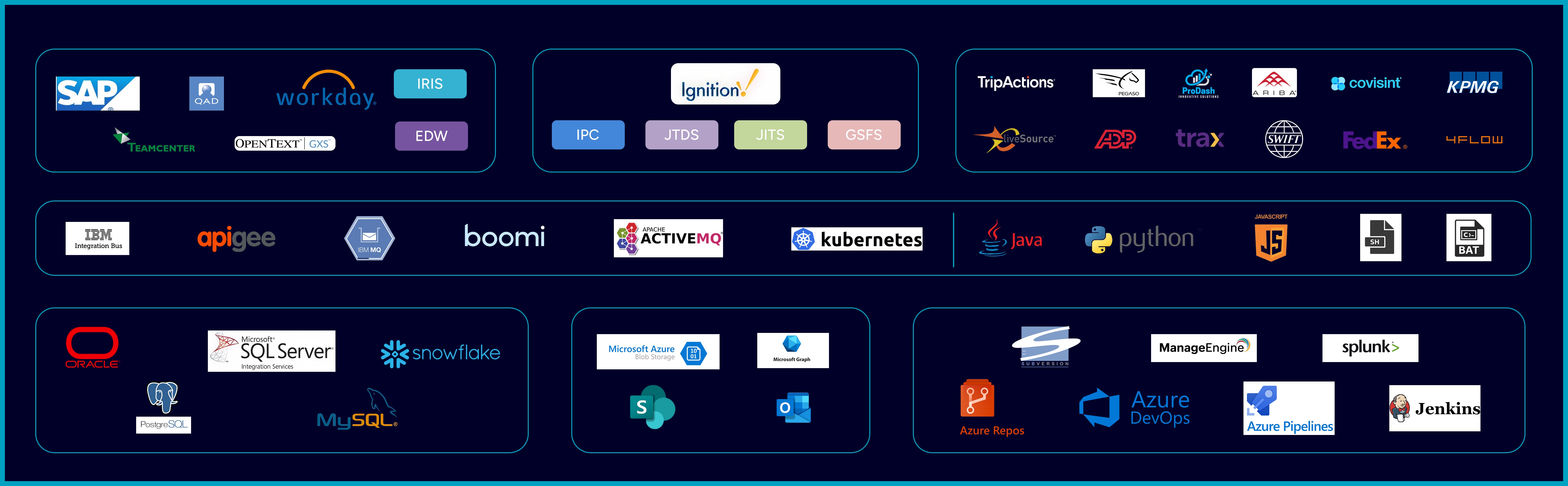
Enterprise Integration is the technical discipline of connecting heterogeneous systems — internal applications, external APIs, cloud services, databases, and devices — so that data flows seamlessly, business processes execute end-to-end, and the enterprise operates as a coordinated system rather than isolated silos.
Why Does It Matter?
The business case for enterprise integration is not theoretical. It is grounded in hard operational realities faced by every organization past a certain scale.
Consider what happens without it: data silos form where customer records exist in four different systems with four different spellings of the same name. Manual processes multiply — someone copying data from a PDF into a spreadsheet into a database. Operational latency grows — the CEO asks for a real-time revenue snapshot and it takes three days. Error rates climb as human re-entry compounds mistakes.
Problem
Data Silos
Duplicate, inconsistent records spread across systems with no single source of truth. Decisions get made on conflicting data.
Manual Re-keying
Staff copy data between systems by hand — slow, error-prone, and a waste of skilled human capacity.
Broken Processes
Business workflows stall at system boundaries, creating delays in fulfilment, reporting, and customer service.
Scalability Walls
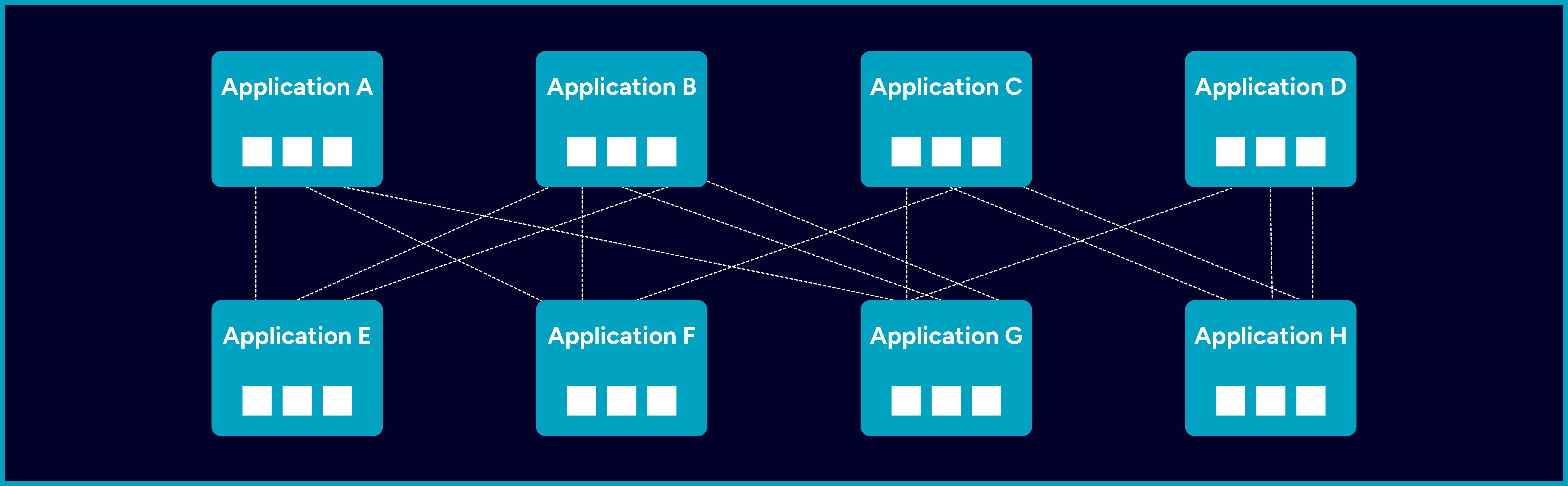
Point-to-point integrations create tightly coupled, brittle architectures that shatter when one system changes.
Conversely, well-executed integration delivers compounding benefits: faster time-to-market for new products, better customer experiences (because every touchpoint shares the same information), more reliable compliance and reporting, and the organizational agility to adopt new technologies without rearchitecting everything. Integration is, ultimately, a strategic capability, not a technical footnote.
Core Patterns & Architectures
There is no single way to integrate systems. The discipline has evolved a rich vocabulary of patterns, each with its own trade-offs. Understanding these is the first step to making sensible architectural choices.
Point-to-Point (P2P)
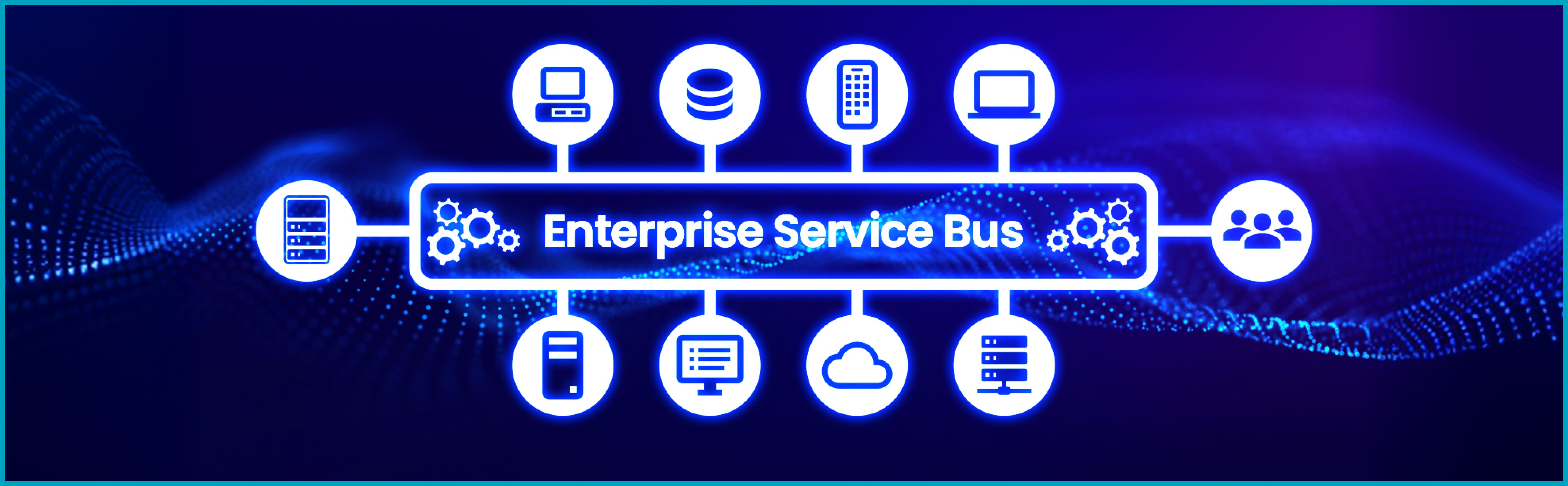
The Enterprise Service Bus model of the 2000s. All systems connect to a central hub (the ESB) which handles routing, transformation, and mediation. Reduces connection sprawl dramatically. The downside: the hub becomes a single point of failure and a bottleneck — the notorious "God ESB" anti-pattern.
Hub-and-Spoke (ESB)
The Enterprise Service Bus model of the 2000s. All systems connect to a central hub (the ESB) which handles routing, transformation, and mediation. Reduces connection sprawl dramatically. The downside: the hub becomes a single point of failure and a bottleneck — the notorious "God ESB" anti-pattern.Event-Driven Architecture (EDA)
Systems publish events to a broker (Apache Kafka, Pulsar, AWS EventBridge) and interested consumers subscribe. The producer doesn't know or care who's listening. This decoupling enables massive scalability, resilience, and the ability to add new consumers without touching producers. This is the dominant pattern in modern enterprise integration.
API-Led Connectivity
Google Apigee, MuleSoft Anypoint popularized a layered API model: System APIs expose core systems (SAP, Salesforce), Process APIs orchestrate business logic, Experience APIs tailor data for specific consumers (mobile, web, partner portals). This creates reusable building blocks across the organization.
Data Integration & ETL/ELT
Moving and transforming data between operational systems and analytical stores. Modern stacks like dbt, Airbyte, and Fivetran have dramatically democratized this layer, enabling "Analytics Engineering" as a distinct discipline.
How Integration Has Evolved
To understand where we are, it helps to understand how we got here. Enterprise integration has gone through several distinct eras, each shaped by the technological constraints and business demands of its time.
EDI & Mainframe Era [ 1980s – 1990s - Present]
Electronic Data Interchange (EDI) allowed companies to exchange standardized business documents (purchase orders, invoices) over proprietary VANs. Expensive, rigid, but revolutionary for its time. Batch processing was king.
EAI & the ESB Age [ Late 1990s – 2000s- Present]
Enterprise Application Integration platforms (IBM Integration Bus, WebSphere MQ) and later ESBs (Mule, Oracle Service Bus) moved integration to a managed middleware layer. XML, SOAP, and web services standardized communication protocols.
APIs, SaaS & Cloud [2010s - Present]
REST APIs replaced SOAP. SaaS proliferation (Salesforce, Workday, ServiceNow) created the modern integration challenge. iPaaS platforms (Dell Boomi, MuleSoft) emerged. The integration problem moved from on-premise to hybrid and cloud.
Event Streaming & Microservices [ 2018 – Present ]
Kafka became the backbone of real-time integration. Microservices architectures distributed integration logic across teams. Service meshes (Istio), API gateways, and event-driven patterns redefined the integration landscape.
AI-Augmented & Composable Integration [Now → Future]
AI generates mapping logic and detects anomalies. Composable architectures and "integration fabric" platforms blend EDA, API management, and data integration into unified layers. The integration developer becomes a curator and architect, not a plumber.
Current Trends in Enterprise Integration
The integration landscape in 2026 is being reshaped by several converging forces. These aren't buzzwords -they are architectural shifts that are actively changing how enterprises build and operate their integration fabric.
AI-Augmented Integration
This is the biggest shift in the field right now. AI is being embedded directly into integration platforms to automate schema mapping (what used to take a developer days now takes minutes with LLM-assisted mapping suggestions), anomaly detection in data flows, auto-remediation of failed integrations, and even natural-language-to-integration-logic generation. Platforms like MuleSoft Anypoint, Boomi AI, and Azure Integration Services are shipping AI-native capabilities rapidly.
The Data Mesh Paradigm
Rather than centralizing all integration into a platform team, the data mesh pattern advocates for domain-oriented data ownership. Each business domain (finance, supply chain, customer) owns and publishes its own data products as APIs or event streams. Integration becomes federated, governed by a platform layer, but executed by the domains that understand the data best.
Composable Architecture
Composable Architecture. Enterprises are moving away from monolithic suites toward packaged business capabilities (PBCs) — modular components that can be assembled and reassembled to support changing business needs. Integration is the glue between PBCs. MACH architecture (Microservices, API-first, Cloud-native, Headless) has become a reference model in retail and digital commerce.
Hyperautomation
Gartner's term for the combination of RPA, AI, process mining, and integration to automate end-to-end business processes. Integration is the connective tissue of hyperautomation — without reliable, real-time data flows between systems, automation breaks at the boundaries.
Zero-Trust Integration Security
As APIs proliferate (the average enterprise now exposes thousands of internal and external APIs), the attack surface grows. Zero-trust principles — verify every request, authenticate every service, encrypt everything in transit and at rest — are becoming non-negotiable in integration design. API gateways with OAuth 2.0, mTLS, and continuous threat detection are now baseline requirements.
The Future of Enterprise Integration
Looking ahead to the next five to ten years, the trajectory of enterprise integration points toward a world that is simultaneously more autonomous, more composable, and more deeply embedded in the fabric of every business decision.
Autonomous Integration Agents
Within five years, AI agents will design, deploy, and monitor integration flows with minimal human intervention. An architect will describe a business requirement in natural language — "when a high-value customer places an order over $50,000, notify the account executive, update the demand plan, and trigger a credit check" — and an AI system will generate, test, and deploy the integration automatically.
Real-Time Everything
Batch processing will become an exception, not the norm. Event streaming platforms will power truly real-time enterprise operations — inventory that updates on every sensor scan, pricing engines that react to supply chain signals within milliseconds, financial close processes that are continuous rather than monthly.
Semantic Integration Layer
Knowledge graphs and ontologies will give rise to a semantic integration layer where systems share meaning, not just data. Rather than brittle field mappings between schemas, systems will reason about shared concepts — "customer," "order," "product" — and resolve differences intelligently.
Integration as a Living System
The integration fabric of the future will be self-healing and self-optimizing. It will detect failures, reroute traffic, scale dynamically, flag data quality issues, and surface insights about business process performance — all without human intervention. The integration architect's role will shift from building pipelines to designing governance models, setting policies, and steering autonomous systems.
The skillset of the integration professional will evolve accordingly. Deep knowledge of mapping, XSLT and specific middleware products will matter less. Architectural thinking, business domain knowledge, data governance, and the ability to work with AI-assisted tooling will matter more. The most valuable integration architects will be those who can translate between business intent and technical capability — a role that is deeply human, even as the tools become increasingly automated.
Key Takeaways
Enterprise Integration is the connective tissue of modern business — enabling systems to cooperate, data to flow, and processes to execute across organizational and technical boundaries. From EDI batch files to AI-generated real-time event flows, it has always been the unsexy but mission-critical infrastructure that either accelerates or constrains enterprise capability. The one who master it shape how fast their organizations can move, adapt, and compete.